
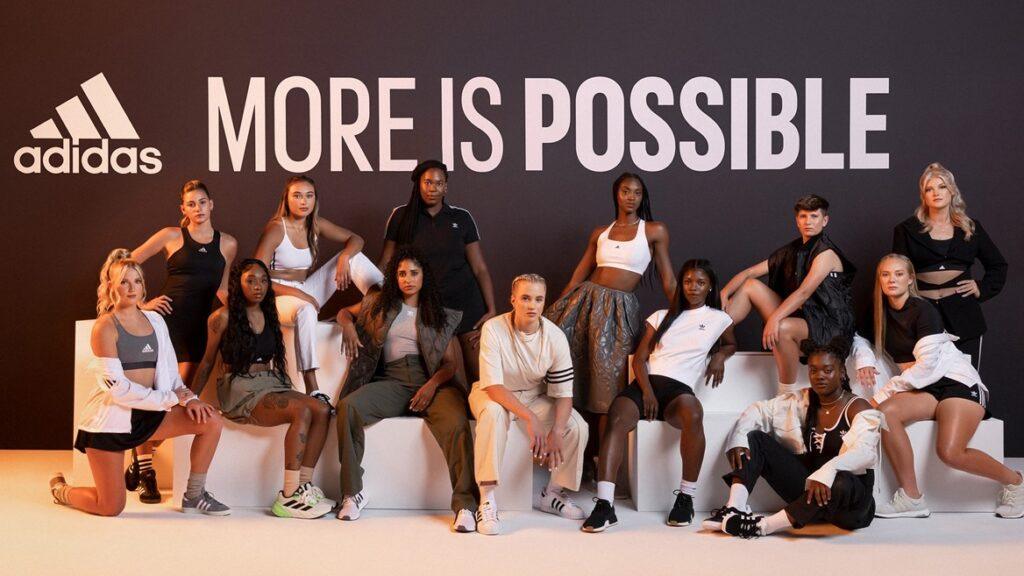
A diverse group of athletes showcases various Adidas apparel in a promotional photo for the brand.
The emergence of Name, Image, and Likeness (NIL) deals has fundamentally transformed college athletics, creating unprecedented earning opportunities for student-athletes. For women athletes, however, this new era brings both promise and peril as they navigate potential Title IX implications while building their personal brands. Understanding how NIL intersects with gender equity laws has become crucial for female college athletes seeking to maximize their opportunities while protecting their rights.
The Foundation: Title IX’s Role in College Sports
Title IX, enacted in 1972, prohibits sex-based discrimination in educational programs receiving federal funding, including college athletics. The law requires institutions to provide equal treatment in scholarships, facilities, coaching, and promotional support. This landmark legislation has been instrumental in expanding opportunities for women in sports, increasing female athletic participation by over 1000% since its implementation.
With NIL deals now part of the equation, a critical question emerges: Do these privately negotiated agreements fall under Title IX’s protective umbrella? The answer isn’t straightforward, creating a complex landscape that female athletes must carefully navigate.
Legal Uncertainty in the NIL Era
The current legal framework surrounding NIL and Title IX remains murky. Recent court decisions, including cases where judges have rejected Title IX objections to NIL settlements, indicate that courts are still determining how traditional gender equity laws apply to these new compensation structures.
The key distinction lies between institutional support and private market deals. While universities must comply with Title IX in their direct support of athletic programs, private companies making NIL deals with individual athletes operate outside this regulatory framework. This separation creates a two-tiered system where equality is mandated in one sphere but not the other.
The Disparity Dilemma
Early data reveals concerning disparities in NIL earnings between male and female athletes. Male athletes, particularly in football and men’s basketball, command significantly higher NIL valuations than their female counterparts. This gap raises important questions about whether market-driven inequalities constitute a form of discrimination that institutions should address.
However, notable exceptions offer hope and blueprint for success. Athletes like Paige Bueckers have secured groundbreaking deals, including becoming Nike’s first college NIL athlete with a Player Edition sneaker. These success stories demonstrate that women athletes can achieve substantial NIL earnings when visibility, talent, and marketing align effectively.
Institutional Influence on NIL Success
Universities play a crucial, often underappreciated role in creating conditions for NIL success. The relationship between institutional support and NIL earnings cannot be ignored. Schools that invest heavily in promoting certain sports create better conditions for those athletes to secure lucrative deals. When institutions provide unequal media exposure, marketing support, or networking opportunities, they may inadvertently perpetuate NIL disparities.
This indirect influence raises critical questions about institutional responsibility under Title IX. If a university provides preferential NIL education sessions, exclusive networking events with potential sponsors, or better social media support to male athletes, these actions could constitute Title IX violations. The line between supporting athletic programs equally and ensuring equal NIL outcomes remains contested and unclear.
Legislative Responses and Future Protections
Recognizing these challenges, lawmakers have begun introducing legislation to address NIL-related concerns. The recently introduced HUSTLE Act, championed by Senators Marsha Blackburn and Maria Cantwell, aims to help college athletes better manage their NIL earnings through tax-advantaged investment accounts and mandatory financial education.
While not specifically targeting gender disparities, such legislation could benefit all athletes by providing tools to maximize their earning potential. Additional proposals under consideration include requirements for transparent NIL reporting and institutional accountability measures.
Strategies for Women Athletes
Given the current landscape, women athletes must take proactive steps to protect their interests and maximize opportunities. Key strategies include:
First, document any instances of unequal NIL-related support from your institution. Keep records of resources, opportunities, and support provided to different athletic programs. This documentation could prove crucial if Title IX concerns arise.
Second, actively build your personal brand. Leverage social media platforms to showcase your personality, athletic achievements, and community engagement. Many successful female athletes have found that authentic storytelling and consistent engagement can overcome traditional market biases.
Third, seek collective action opportunities. Women’s sports teams can negotiate group NIL deals, share resources, and advocate together for equitable institutional support. The recent rise of women’s college basketball players achieving higher NIL valuations demonstrates the power of coordinated efforts.
The Path Forward
The intersection of NIL and Title IX remains a developing area of law and policy. While private NIL deals may not directly violate Title IX, the broader ecosystem of institutional support remains subject to gender equity requirements. Universities must carefully balance their obligations to provide equal opportunities while navigating the reality of market-driven NIL valuations.
Women athletes stand at a critical juncture. The NIL era offers unprecedented opportunities to monetize their talents and build lasting brands. However, realizing this potential requires understanding the legal landscape, advocating for equitable support, and strategically positioning themselves in the marketplace. As this landscape continues evolving, the push for equity in NIL deals represents the next frontier in the ongoing fight for gender equality in college athletics.
