
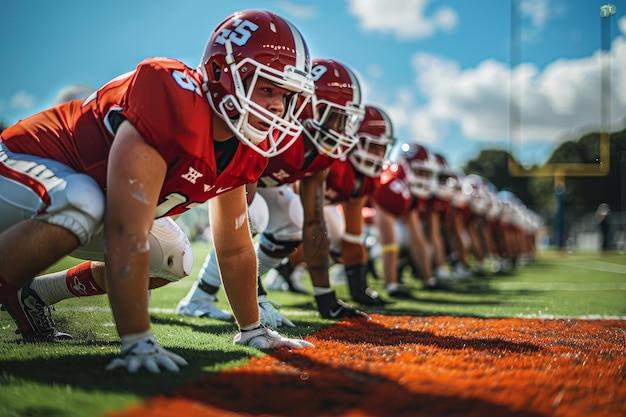
A group of football players lines up in formation during practice, emphasizing teamwork and readiness.
The New Reality of College Sports
The revolving door of college coaching has reached a dizzying speed. With colleges agreeing to nearly $228 million in severance pay for football coaches this year alone—almost doubling previous records—the impact extends far beyond athletic department budgets [Source: Inside Higher Ed]. For the thousands of student-athletes whose careers depend on consistency and development, these frequent leadership changes are creating unprecedented challenges that reshape their collegiate experience and future prospects.
Today’s college athletes face a landscape their predecessors could never have imagined. The combination of coaching changes, the transfer portal, and Name, Image, and Likeness (NIL) deals has created what experts describe as “chaotic” conditions for young athletes trying to navigate their careers [Source: ESPN]. Justin Cessante, coach at Detroit Catholic Central High School, notes that recruits often have just “a few days or even hours” to readjust their college decisions when coaching changes occur during critical signing periods.
The timing couldn’t be worse. Under the current format, national signing day happens during conference championship week, the transfer portal opens during the College Football Playoff, and some coaches are secretly interviewing for other jobs before Halloween [Source: AP News]. This compressed calendar forces athletes to make life-altering decisions with incomplete information and under intense time pressure.
The Domino Effect on Player Development
When a new coach arrives on campus, they bring more than just fresh energy—they bring entirely new systems, philosophies, and expectations. For athletes who have spent years mastering a particular playbook or style, this transition can derail their development trajectory. Consider Texas running back CJ Baxter, a former five-star recruit whose injury-derailed career never fully recovered under new coaching schemes [Source: Sporting News]. Despite early promise with 659 rushing yards as a true freshman, system changes and recovery challenges led him to enter the transfer portal.
The ripple effects extend beyond individual players. New Florida head coach Jon Sumrall and general manager Dave Caldwell identified their “first recruiting priority” as their own roster—essentially having to re-recruit players who had already committed to the program under previous leadership [Source: 247Sports]. This phenomenon has become so common that coaches now budget significant time for roster retention alongside traditional recruiting efforts.
The Transfer Portal Revolution
The NCAA’s transfer portal has fundamentally changed how athletes respond to coaching changes. What was once a difficult, often career-ending decision to transfer has become a routine option. Tracking former Minnesota basketball transfers reveals players now routinely attending their third or even fourth schools, chasing the right fit as coaching staffs shuffle across the landscape [Source: Sports Illustrated].
This mobility comes with costs. Athletes lose continuity in their academic progress, must rebuild relationships with teammates and support staff, and often sacrifice playing time as they learn new systems. The psychological toll of constantly adapting to new environments, combined with the pressure to perform immediately to justify their transfer, creates additional stress on young athletes already managing demanding schedules.
Financial and Career Implications
The financial stakes have never been higher for college athletes. With NIL opportunities now part of the equation, coaching changes can directly impact an athlete’s earning potential. A player who thrived in one system might find themselves benched in another, watching their NIL value plummet alongside their playing time. Additionally, professional scouts value consistency and development—frequent system changes and transfers can raise red flags about an athlete’s adaptability or commitment.
The timing of these changes often forces impossible choices. Athletes must decide whether to follow a departing coach who recruited them, stay with a program under new leadership, or enter the transfer portal to find a better fit—all while maintaining their academic standing and athletic performance. For seniors especially, a late-career coaching change can mean the difference between showcasing their skills for professional opportunities or spending their final season learning a new system from the bench.
Looking Forward: The Need for Systemic Change
As the coaching carousel spins faster each year, calls for reform grow louder. There’s “rampant talk about college football adopting an NFL-style calendar,” which would move coaching changes to after the season ends, allowing for more orderly transitions that better protect athlete interests [Source: AP News].
Until such reforms materialize, athletes must navigate this unstable landscape with resilience and strategic thinking. Many are now considering coaching stability as a primary factor in their college choice, researching buyout clauses and athletic department history before committing. Others are building broader support networks—academic advisors, mental health counselors, and personal trainers—that can provide continuity even as coaching staffs change.
The Human Cost
Behind every coaching change statistic is a young person whose dreams and hard work hang in the balance. These athletes didn’t sign up to be free agents in a professional sports model—they committed to colleges with the expectation of development, education, and opportunity. As programs continue to treat coaching positions as revolving doors, prioritizing short-term wins over long-term athlete development, it’s the players who pay the price.
The current system asks 18-22 year olds to display professional-level adaptability while maintaining academic standards, peak physical performance, and mental health. It’s a big ask, and one that deserves more consideration from administrators quick to pull the trigger on yet another coaching change.
For college sports fans watching this drama unfold, remember that beyond the press conferences and signing day announcements are young people trying to build their futures in an increasingly unstable environment. Their resilience in the face of constant change deserves recognition—and more importantly, it deserves a system that values their development as much as it values wins and losses.
